
Jingle Quiz: logo music trivia
SAS ELIATrivia
4.4799.00 Reviews
- Version
- 26.5.0
- Installs
- 1.00M
- Age Rating
- Everyone
Screenshots
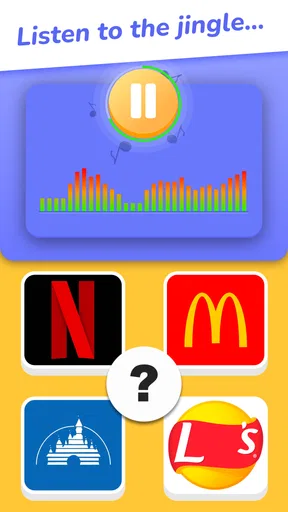
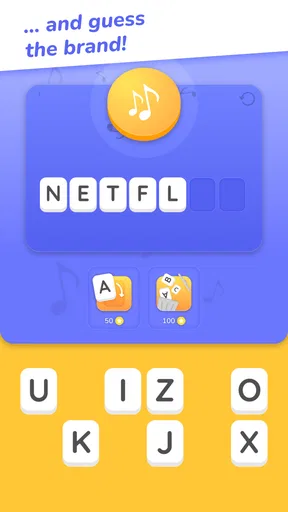
Our Review of Jingle Quiz: logo music trivia
 Analysis by Appyee
I enjoy trivia games that give me a reason to listen carefully instead of simply tapping through a question bank. Jingle Quiz: logo music trivia takes that approach by turning recognizable brand sounds into short guessing challenges. It sits between a music quiz and a logo quiz, but the important difference is that your ears do most of the work. You are not identifying a picture alone; you are trying to connect a sound with the brand identity behind it.
That makes it an appealing choice for quick breaks, casual group play, and anyone who notices advertising music more than they expect. I found the idea easy to understand immediately, while the actual difficulty depends heavily on memory, familiarity with brands, and how quickly a short musical cue triggers recognition. The game is free to start, rated for Everyone, and developed by SAS ELIA. It has reached over a million installs and holds a 4.4 average from around 31 thousand ratings, which suggests that the format has found a sizeable audience without pretending to be a full music-learning tool.
How to decide whether this trivia format suits you
The first question is whether you want a game based on recognition rather than broad factual knowledge. Traditional trivia may ask about history, geography, sport, or science. A standard logo quiz usually gives you a visual mark and expects you to name the company. This game changes the starting point: the sound comes first, and the logo connection follows. If you enjoy the moment when a tune feels familiar before the answer reaches you, that distinction matters.
I would also consider how you normally play. This is better suited to short sessions than to someone looking for a long story, a strategic campaign, or a deep collection system. A few rounds can fit into a commute, a waiting room, or a relaxed evening with friends. The compact nature of the challenge is part of its appeal, but it also means the experience may feel repetitive if you need constant mechanical variety.
Another useful decision criterion is your relationship with commercial music and branding. The game’s subject is not general musical theory. You do not need to read notation or identify composers. Instead, success comes from having encountered particular brand sounds often enough for them to remain in your memory. Someone who watches a lot of television, online video, or advertising may have an advantage, while a player who avoids commercial media may find several questions less familiar.
The age rating of Everyone makes it an easy option for mixed-age households. I can imagine younger players enjoying the guessing element while adults contribute memories of sounds they have heard for years. Still, the age rating should not be confused with universal accessibility in the practical sense. Recognition is personal: one player’s obvious answer can be another player’s complete mystery.
The current version is 26.5.0, and the game supports devices running Android 7.0 or later. That makes compatibility fairly broad for people using an older Android phone, although anyone with a device below that requirement should check before planning around it. The game is free, but in-app purchases range from $1.99 to $19.99 per item. I would treat that as an important part of the decision, especially if you prefer games that never place any spending pressure on a casual session.
What the first sessions feel like
The core loop is straightforward: listen to a logo-related sound, make a guess, and move on to the next challenge. That simplicity is a strength because there is almost no learning curve. I did not need a tutorial explaining a complicated scoring system or a collection of controls. The concept is clear within moments, which is exactly what I want from a quick trivia game.
What gives the loop its personality is the gap between hearing and knowing. Sometimes recognition arrives instantly. At other times, I could identify the sound as familiar but could not attach it to a name. Those are the most engaging moments because the game turns a vague memory into a small puzzle. It rewards attention to audio details that I would normally ignore.
The visual side still matters, but it does not replace the listening challenge. Once a player starts relying only on a visible clue, the game loses much of its point. I found it more satisfying to make an initial guess from the sound, then use any available visual context to confirm or correct it. That creates a better balance between the music-trivia and logo-quiz sides of the concept.
For a group, I would play it by passing the phone around or calling out answers before anyone commits. That changes the experience from a solitary memory test into a conversation starter. One person may recognize the melody, another may remember the brand name, and a third may know why the sound feels familiar. The game works particularly well when nobody is expected to be an expert.
Where the game wins over ordinary logo quizzes
The strongest advantage is that it tests a less obvious kind of memory. A normal logo quiz often rewards visual exposure: see a shape, recall a company, type the answer. Here, the trigger is auditory. That makes each question feel less like image matching and more like discovering how strongly a sound has stayed in your head.
The best reason to choose this game is the change in recognition order: you hear first, remember second, and confirm last. That small reversal gives it more personality than a basic logo database. It also makes the game useful for players who find visual quizzes too predictable but do not want a complicated music game.
I also like the social potential. With a conventional trivia app, players may need to take turns reading questions and checking answers. A logo sound can provoke an immediate reaction from everyone in the room. Even incorrect guesses are entertaining because they reveal which brands or jingles people associate with a particular musical pattern.
There is a practical benefit for solo play too. Because the challenge is based on short recognition moments, I can stop after a small number of rounds without feeling that I have abandoned a long session. That is different from games built around extended levels, where leaving midway can feel inconvenient. This one fits naturally into spare minutes.
The concept is also more approachable than music trivia that focuses on artists, albums, release history, or technical terminology. You can enjoy it without knowing the details of a song’s production. The question is simply whether the sound connects with a brand in your memory. That lowers the barrier for casual players while preserving enough uncertainty to make guesses interesting.
Three ways I would get more from it
My first tip is to separate recognition from certainty. When a sound seems familiar, I would say the first answer that comes to mind before looking for confirmation. This prevents the visual side of the quiz from doing all the work and helps reveal which sounds I genuinely remember. It also makes wrong answers more useful because I can notice what other brand or melody my brain confused with it.
Second, I would use it as a memory game with friends rather than treating every round as a private score test. Ask everyone to name the brand at the same time, then discuss what each person heard in the cue. This is especially effective when players have different ages or media habits. The disagreement becomes part of the entertainment, and nobody needs to be familiar with every item to participate.
Third, I would avoid spending immediately. Since the game is free to play, I would first decide whether the sound-based format remains enjoyable after the novelty wears off. If I were considering an in-app purchase, I would judge it against how often I actually return, not against a single exciting session. The listed purchase range reaches from $1.99 to $19.99 per item, so setting a personal limit beforehand is sensible.
A fourth approach is to use the game as a listening warm-up before a broader music quiz. It trains the habit of paying attention to short musical signatures, but it should not be mistaken for a substitute for questions about songs, artists, instruments, or music history. Its narrow focus is exactly what makes it accessible, and also what limits its usefulness outside this particular kind of recognition.
Where another type of game may fit better
I would choose a traditional trivia game instead if I wanted subject variety. Players who enjoy switching between science, geography, literature, and current events may find a logo-sound format too concentrated. The appeal here comes from repetition within a clear theme, not from covering everything.
A visual logo quiz may be better for someone who has difficulty playing with sound, prefers image-based puzzles, or wants to solve challenges silently in public. This game’s identity depends on hearing the cue, so it is not the most natural choice for a noisy environment. It can still be played casually, but the audio element is central rather than decorative.
Music-identification games focused on artists or songs may suit players with a strong interest in personal music libraries. Those alternatives usually reward knowledge of performers, lyrics, genres, or release periods. Jingle Quiz takes a different route: it asks what brand a sound represents. Neither approach is automatically better, but the distinction is important before downloading.
I would also skip it if I need a deep progression system or a competitive experience with detailed strategy. The attraction is the guessing itself. If you expect character development, elaborate customization, or a large tactical layer, this is likely too light. Its value is in quick recognition and shared reactions, not in building a complex long-term plan.
There is another limitation that is easy to overlook: familiarity can dominate skill. A player’s background, country, age, and media habits may shape the results more than listening ability. That can make the game feel unfair when a sound is obvious to one person and completely inaccessible to another. In a group, I would treat the score as secondary and avoid presenting it as a serious measure of musical intelligence.
What the free model means for switching and staying
Because the game costs nothing to download, trying it carries little financial commitment. The more meaningful cost is attention. You need to decide whether you enjoy a focused quiz about branded sounds enough to keep it installed, especially if your phone already contains several trivia games.
The in-app purchase range deserves a calm approach rather than an automatic rejection. Optional spending can make sense for a player who returns regularly and values the extra content or convenience offered inside the game. For someone who only wants an occasional diversion, the free starting point is probably the better fit. I would not switch from another trivia app solely because this one is free; I would switch because its audio-first format provides a type of challenge the other app does not.
There is also a social switching cost. If your friends already enjoy a general quiz app, introducing this one means explaining a different rhythm and accepting that some players will recognize far more sounds than others. On the other hand, that difference can make it a good addition rather than a replacement. You can use broad trivia for knowledge variety and this game for fast, conversational rounds.
For families, the Everyone rating and simple premise reduce the effort needed to introduce it. Adults can play alongside children without turning the session into a lesson, while children can learn that recognition is not always visual. I would still keep spending decisions with the person managing the device, particularly because the available purchase items are not all at the same level.
My recommendation for the right player
I recommend this game to anyone who likes short audio puzzles, brand recognition, and informal competition. It is especially suitable when you want something that can be understood immediately, played in brief sessions, and shared with people who have different levels of trivia knowledge. The combination of music and logos gives it a clear identity, and the 4.4 average from roughly 31 thousand ratings reflects a generally positive reception.
I would recommend starting with the free version and playing enough rounds to answer one practical question: do you enjoy the act of recognizing the sound, or do you only enjoy the first few familiar answers? If the former is true, it has room to become a regular casual game. If the latter is true, the limited theme may begin to feel narrow, and a broader trivia or music app would probably serve you better.
My final view is positive but specific. This is not a replacement for every trivia category, nor is it a serious music-training experience. It is a focused listening game that turns brand sounds into small moments of memory, surprise, and friendly argument. For that purpose, SAS ELIA has chosen a strong and approachable idea. If you want a lightweight quiz where your ears lead the way, Jingle Quiz is worth trying; if you want broad knowledge, deep progression, or song-based music expertise, choose a different category instead.
Verdict
Strengths of Jingle Quiz: logo music trivia
- Quick rounds make it easy to play during short breaks.
- Recognizing familiar jingles creates a satisfying nostalgia factor.
- Simple controls are accessible for casual players of all ages.
- Quiz format helps users discover brands and memorable advertising music.
- Replay value comes from trying to improve scores and completion time.
Limitations of Jingle Quiz: logo music trivia
- Some answers may depend on regional advertising knowledge.
- Repeated tracks can make later sessions feel less varied.
- A wrong guess can be frustrating when several options sound similar.
- Progress may feel limited for players seeking deeper music trivia.
- Audio-based gameplay is less enjoyable without headphones or clear speakers.
Other Releases by SAS ELIA
View All
People Say - Family Game
Trivia4.7
Similar Picks in This Category
View All
Millionaire 2026 Quiz & Trivia
Quiz & Trivia Games by Submarine Apps4.5

Brain Test 2: Tricky Stories
Unico Studio4.7

Trivia Crack: Brain Quiz Games
etermax4.4

QuizzLand. Quiz & Trivia game
Quiz & Trivia Games by Mno Go Apps4.8

Brain Test: Tricky Puzzles
Unico Studio4.7

Logo Quiz
bubble quiz games4.5
Frequently Asked Questions
What is Jingle Quiz: Logo Music Trivia?
Jingle Quiz: Logo Music Trivia is a casual quiz game that tests how well you recognize familiar songs, sounds, brands, and musical clues. The game presents short audio or visual challenges and asks you to identify the correct answer. It is designed for quick sessions, making it suitable for playing alone, with friends, or whenever you want a light entertainment break.
How does the gameplay work in Jingle Quiz: Logo Music Trivia?
Gameplay is based on listening carefully to a short jingle, song excerpt, or recognizable sound and selecting the answer you believe is correct. As you progress, the questions can become more difficult and may require knowledge of different music styles, popular culture, or well-known logos. The simple tap-based controls make the game easy to understand, even for first-time players.
Is Jingle Quiz: Logo Music Trivia free to download and play?
The game can generally be downloaded without an upfront payment, but availability of advertisements, optional purchases, extra hints, or premium content may depend on the version and platform. Some players may be able to complete the main quiz for free, while others may encounter limits or promotional offers. It is worth checking the store listing for current pricing and in-app purchase details.
Can I play Jingle Quiz: Logo Music Trivia offline?
Offline access may be limited because quiz games sometimes need an internet connection to load advertisements, update question packs, synchronize progress, or provide additional content. Basic parts of the game might work without a connection after installation, but this can vary by device and app version. For the most reliable experience, launch the game online first and review its permissions and requirements.
Is Jingle Quiz: Logo Music Trivia suitable for children and family play?
The straightforward quiz format makes Jingle Quiz: Logo Music Trivia approachable for many age groups, and guessing songs or familiar logos can be enjoyable as a family activity. However, parents should review the recommended age rating, advertising policy, privacy information, and any in-app purchase options before allowing younger children to play. Music and question difficulty may also be better suited to older children and adults.
Play our best games!


